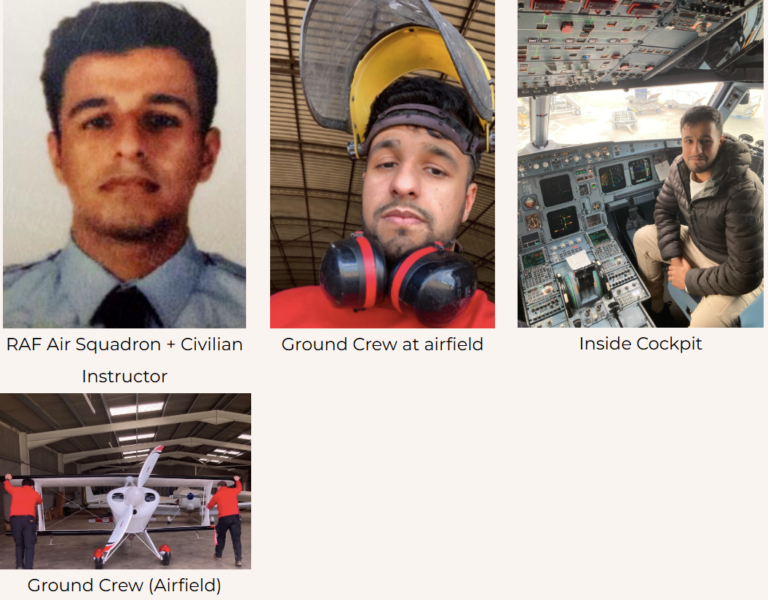
Civilian Instructor – at the RAF Air Cadets.

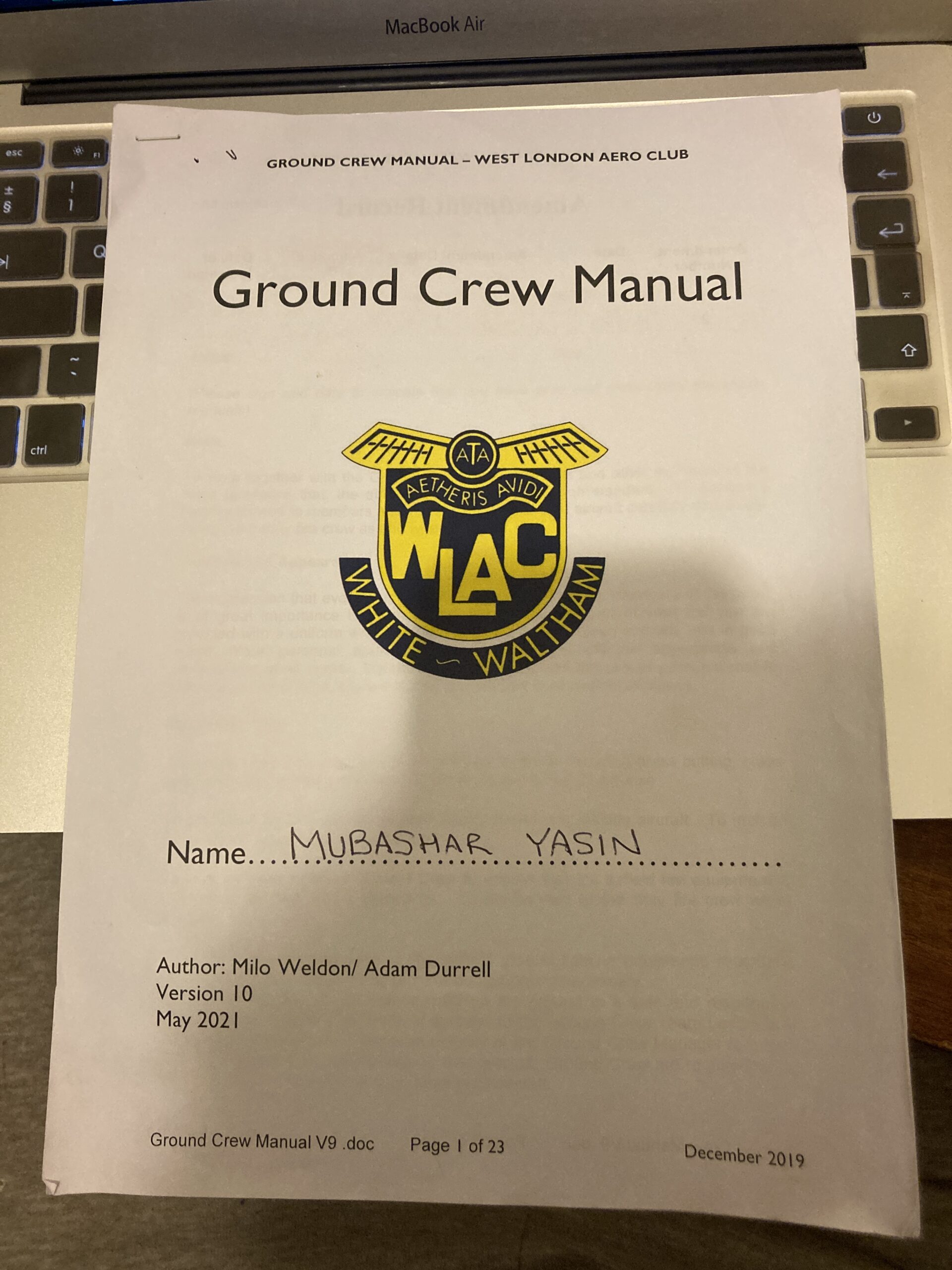
I have applied to the RAF to serve as a RAF Civilian Instructor at my local air squadron. Here I will work with the squadron leader, staff and the cadets to make a real difference in young people aged 12 and above. Having been in the RAF Air Squadron as a cadet myself (see below) I decided to share my skills and experience. Below is the booklet I was given during my induction training – I continue to live by these ethos and values.
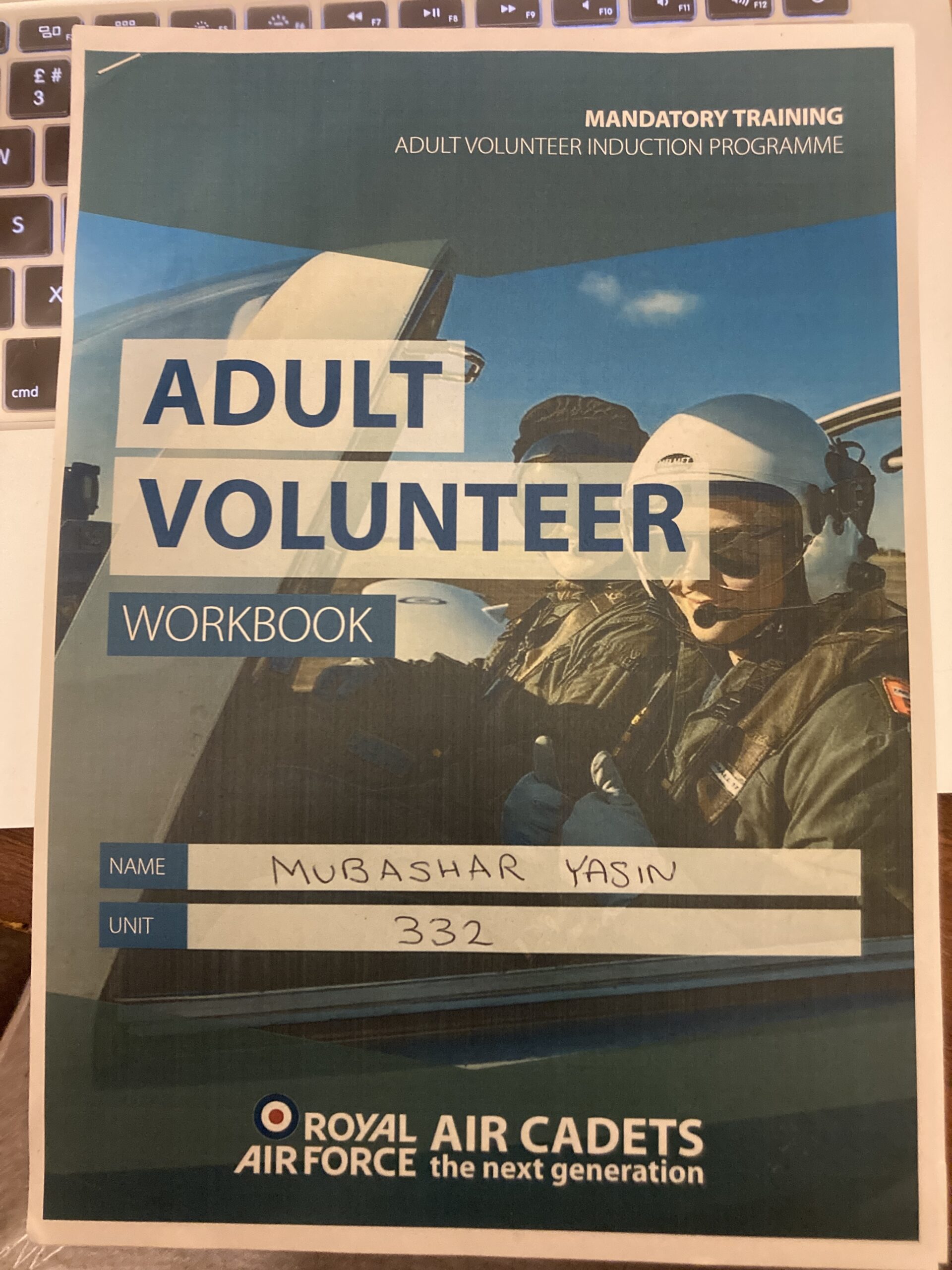


As a Civilian Instructor (CI) I will have a multitude of responsibilities and duty of care to our Air Cadets. I’ve broken this into 5 core responsibilities that I will uphold as a potential CI. These include:
1. Training and Instructing – as a CI I will provide instruction and train cadets through skilled topics I can add value through – such as aviation, leadership, drill, first aid and navigation. This is usually in the evenings at the squadron but can also take place at training visits away from the main base.
2 – Mentoring and Guidance – as a CI I will act as a mentor and role model. Our role offers personal and professional development – examples of this include where we help cadets set goals, how they will achieve this and what can we do to help them achieve this. I will also encourage cadets to develop new skills – for example, resilience and working under pressure – key skills required as an airline or RAF pilot.
3 – Activity Planning and Supervision – I will work with the squadron leader particularly when it comes to away days. Here I will organise activities, such as field trips, camps and competitions. For example, recently we took a cohort of air cadets for gliding.
4 – Administrative Support – this is the boring part of the job. But lucky our squadron is very organised so I don’t think I’ll spend too much time on admin.
5 – Promotion of Values and Ethos – as part of my role we promote the value and ethos of the RAF Air Cadets. For example, this typically includes respect, teamwork, personal development and leadership. These values are instilled into cadets at a young age – preparing them for success in all aspects of life – even if they decide not to go into the military!
Officer Cadet – at the RAF University Air Squadron (RAF UAS).
I joined the University Air Squadron (UAS) in 2018 and was there till 2020 (maximum is 3 years only). UAS is a program in the UK that provides university students with the opportunity to experience military aviation and learn about the Royal Air Force (RAF). UASs are affiliated with specific universities and offer various activities such as flying training, leadership development and exposure to RAF operations. The programme aims to inspire and educate students about aviation and potentially recruit them into the RAF as officers.
The Selection Process
The selection process for the UAS is incredibly intense. The competition is high to secure a spot at UAS.
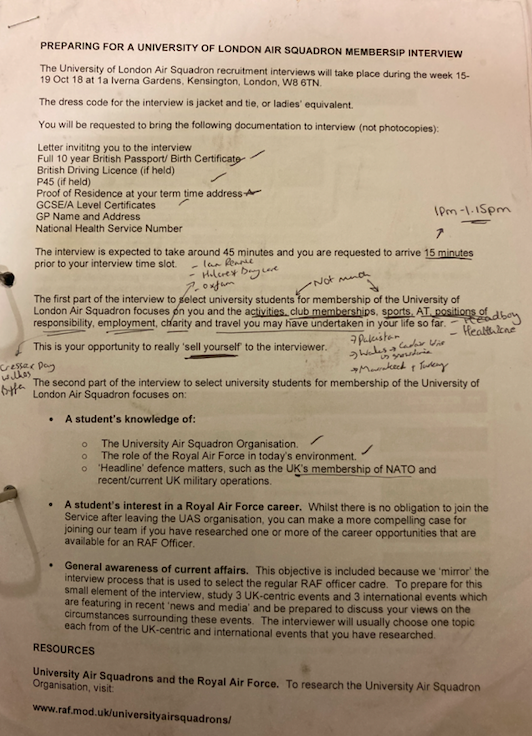
- Application stage: The formal application typically includes a set of basic application questions. It also includes a series of motivational questions – I.e. Why you wish to join, what can you bring to the squadron and what differences have you made to the community? These are capped to a certain word count usually.
- Interview stage: If you pass this stage you are invited to a 45 minute formal interview. I was interviewed by the Squadron leader – Officer Commanding Squadron Leader McCann. This was split into three parts: (1) talk around your social engagement – i.e club memberships, flying, sports, responsibilities or community work and contributions. The second part focuses on student knowledge. Questions are asked around the Air Squadron as an organisation, the role of the Royal Air Force, headline defence matters, the role of the royal family and current UK military operations and opinions. You are also asked around your ambitions and interest to join.The final part of the interview asks you to analyse 3 UK-centric events and 3 international events. During the interview you will be asked any question around these events – i.e. dates, number of personnels involved (if military missions) and articulating your opinion.
- Second interviews: This stage varies across squadrons. Some squadrons may hold second interviews with HR + another high ranking personnel. I did not have a second interview.
- Fitness test stage: You are then required to run across 20m markers on either side (i.e. the bleep test). Level 9 shuttle 10 is required to pass the bleep test. You are also required to do 20 press ups and 35 sits ups across 1 minute each. Please note – this was for males but for females the pass mark is lower.
- RAF Medical stage: This is an RAF medical examination including a range of checks. This included eyesight, hearing and dynamic functional testing (heel raises, edge walking along a long plank, press ups), dental check. My heart and lungs were examined using a stethoscope. I also had a urine test completed. A blood prick was also taken to test for any diseases. This was not as intensive as it sounds and was relaxed. The entire session lasted around 90 minutes.

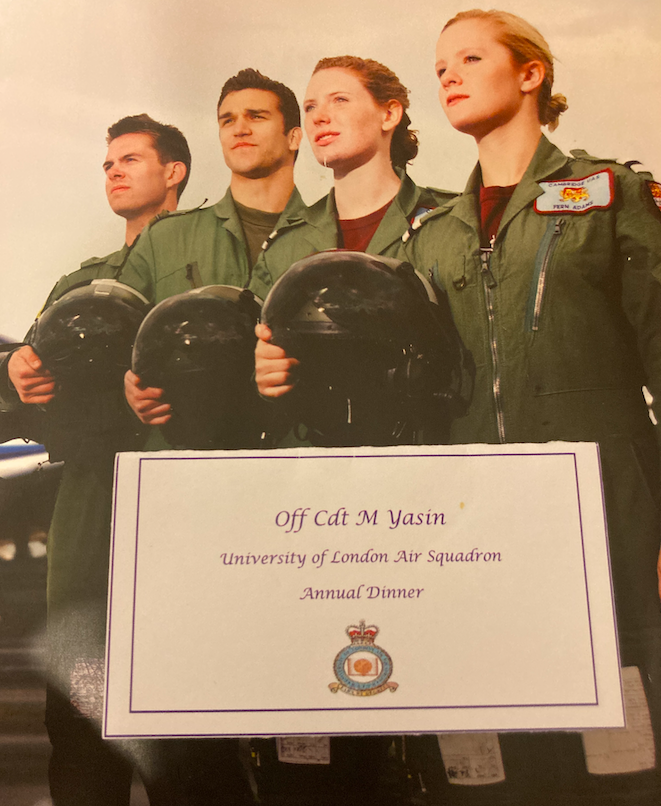
Once you pass that you are welcomed to the Squadron! You have to complete a basic security check and sign security documents and voila you’re in. I know the selection process is intense but it’s definitely worth it once you are in the squadron. You can expect to attend town-night sessions once a week as a minimum. And there are a range of activities open to you (or you can create them!).
Activities with the RAF Air Squadron
As a group, I was involved in co-planning canoeing expeditions, a week long skiing trip in Austria and a survival course at RAF St Mawgan. Out of all the amazing things we did – survival course is definitely up there. I was taught surviving in a radioactive forest and enemy evasion. I remember when I go to the forest I was told – “Here’s some food, water and rope. Build a shelter, stay hydrated and remember to survive.” It was exciting yet an “Oh my God” moment.
I also had the opportunity to be a stewards at a number of events – such as RIAT, Trooping the Colour and Wimbledon. Through the Air Squadron I also attended the International Four Days Nijmegen march in The Netherlands and completed a weapons training course at RAF Wittering.
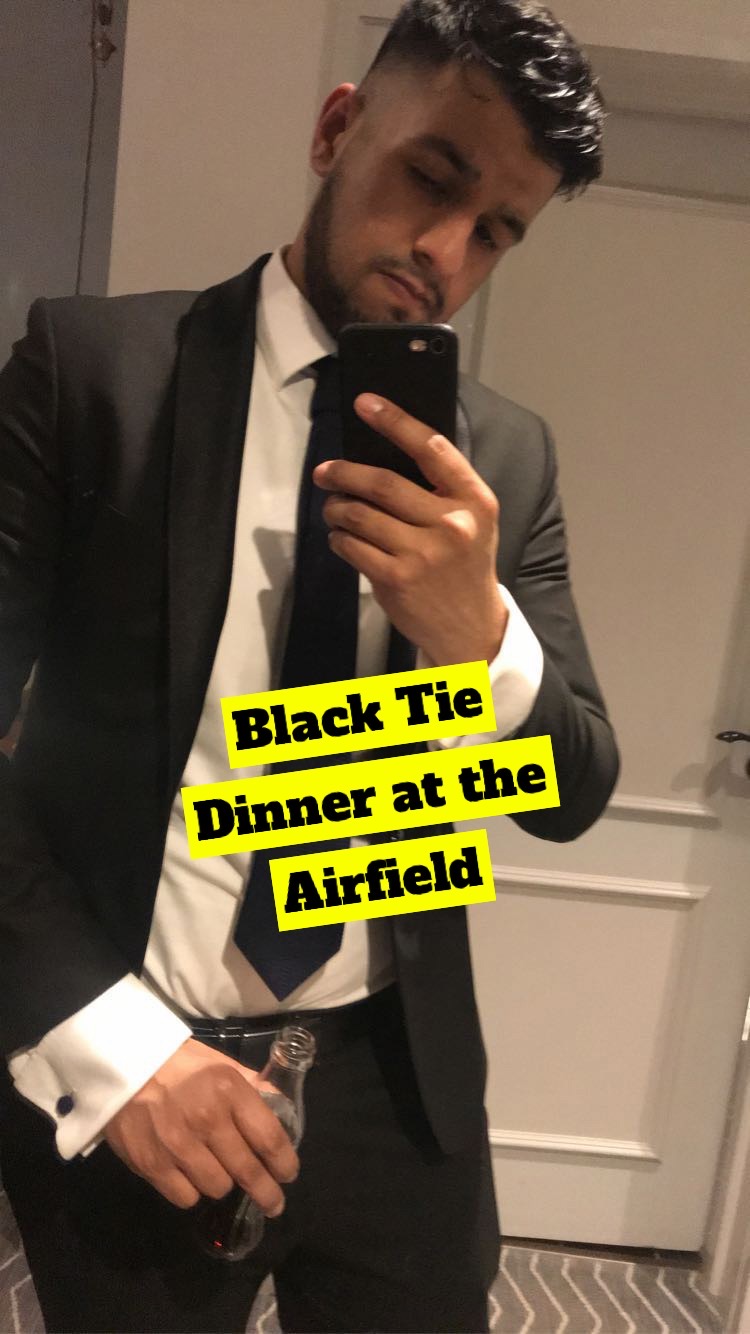
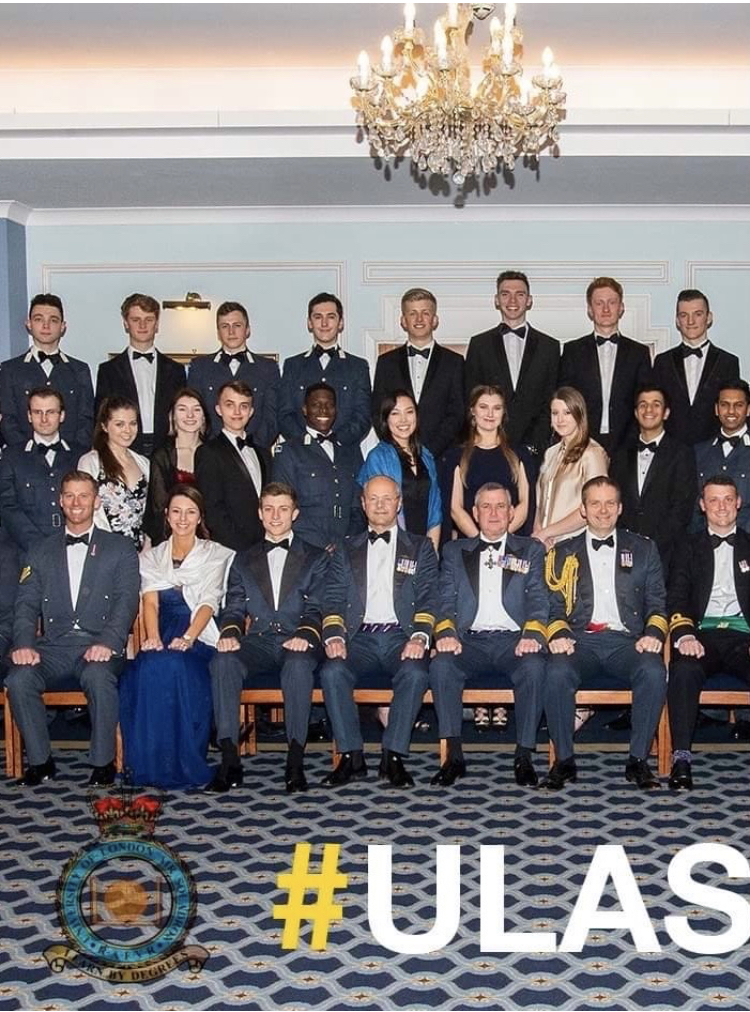
I also attended a few gala dinners hosted by the UAS.
I did all of this in one year! Unfortunately soon after we were hit by COVID and lockdowns which meant the squadron was closed for business for a while.


Skills I learnt through being in the RAF Air Squadron
In the RAF I acquired a wide range of skills, such as:
1 – Technical Skills: I received training in a number of different areas. One notably being the aircraft itself and weapon systems.
2 – Leadership, Management and Teamwork: RAF is very big on personal development – with emphasis on leadership. I lead the Inter-Squadron games and made critical decisions in team-based ‘hypothetical’ scenarios.
3 – Communication: Effective communication is a given requirement in RAF. Almost instantly I learnt how to communicate clearly and efficiently across ranking officers. As well as collaborate and coordinate to meet a common objective – such as strategic planning to meet goal or delegate tasks in preparation for the Nijmegen March in The Netherlands.
4 – Problem solving and Decision-making: I learnt to think critically, analyse situations and make informed decisions under pressure. Examples include navigating in a deserted place under complete isolation to safety – this was during summer training trips.
5 – Resilience: Achieving this was a steep learning curve for me. Understanding the RAF manners and etiquettes was initially tough. Also working across demanding environments was challenging yet incredibly rewarding after. Looking back at it I definitely feel as though I can now easily adapt in any situation, remain resilient and adjust to new tasks to achieve what is required of me.
Through the UAS I also had the opportunity to visit RAF Cranwell College, RAF Wittering, RAF Benson and many other RAF sites all over the UK.


Elementary Flying with the RAF
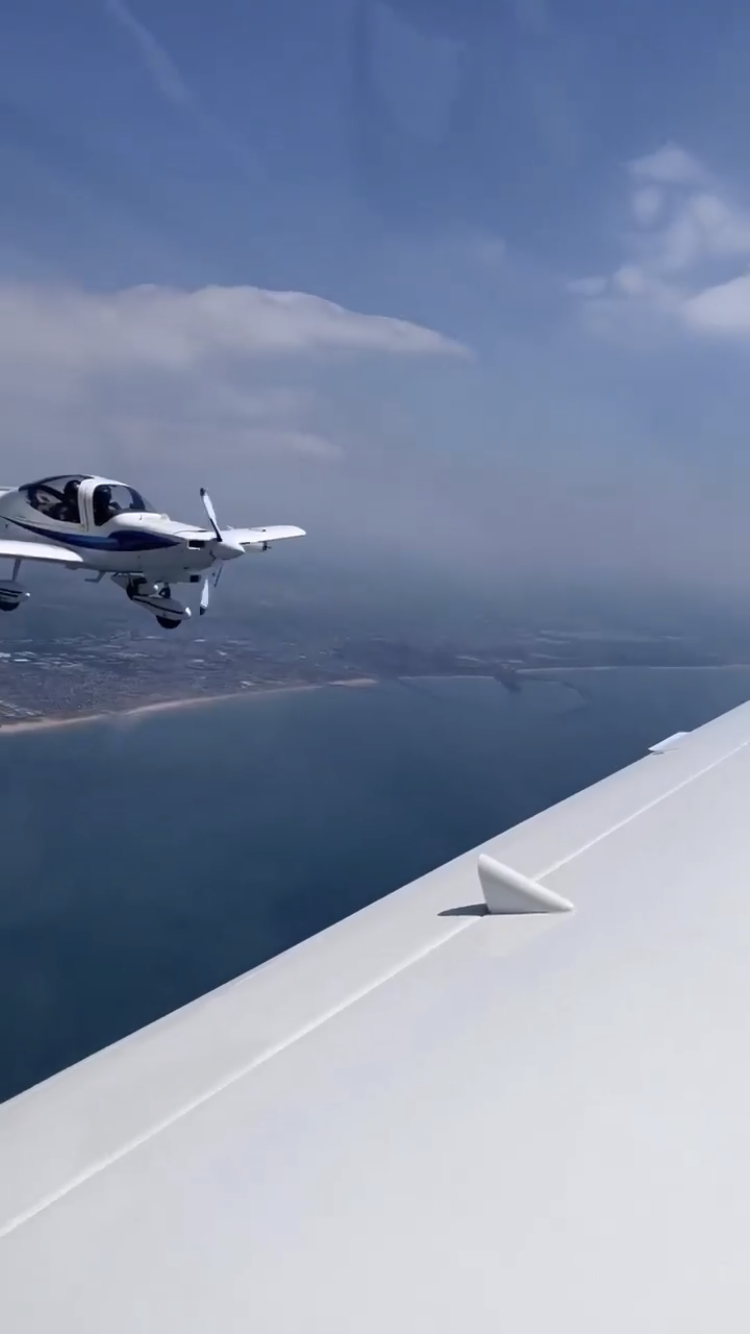
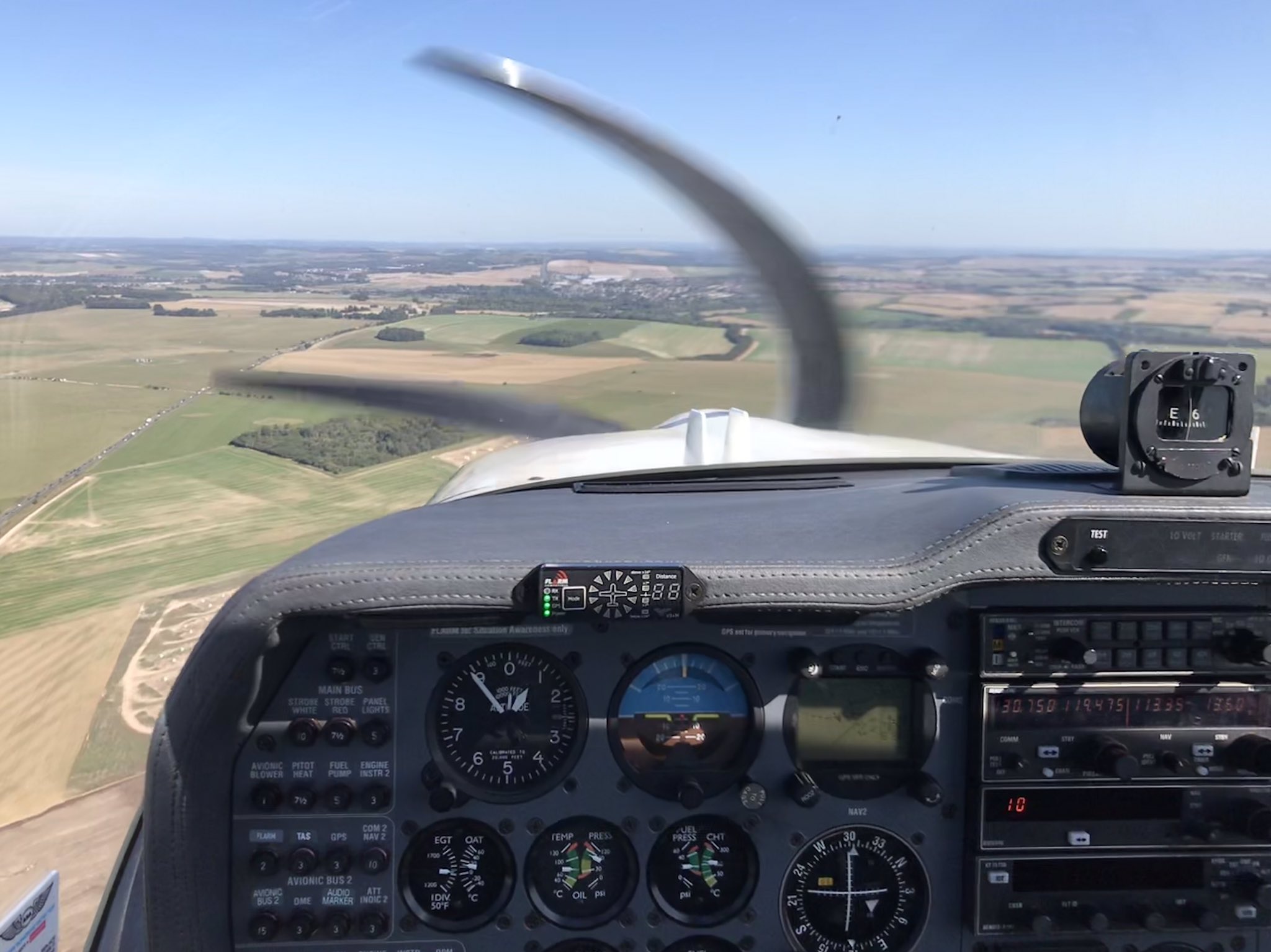
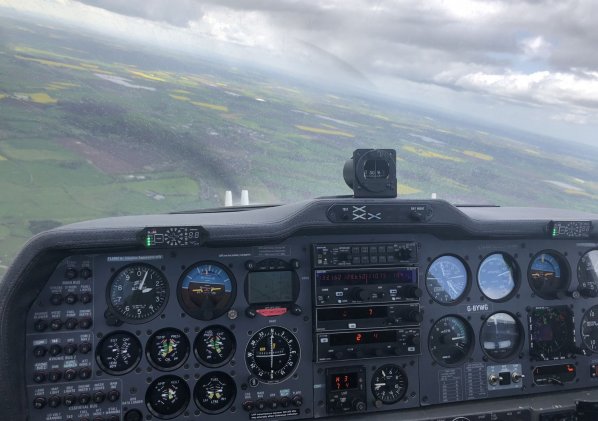
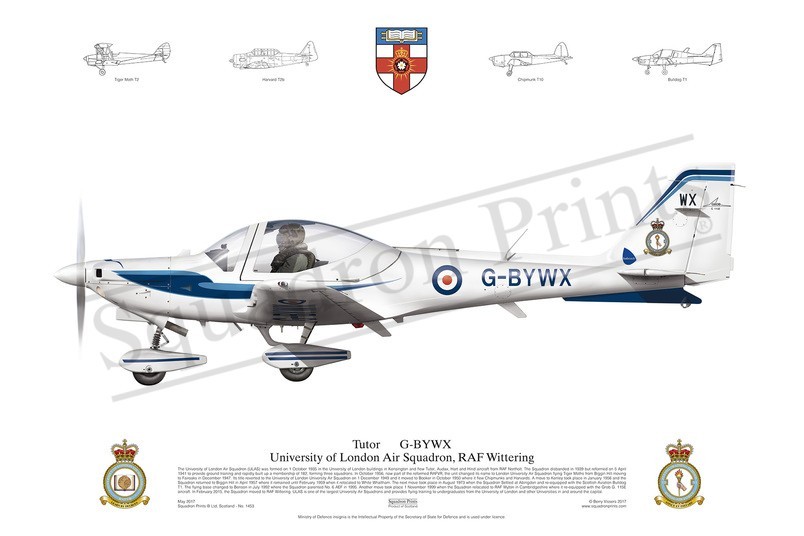
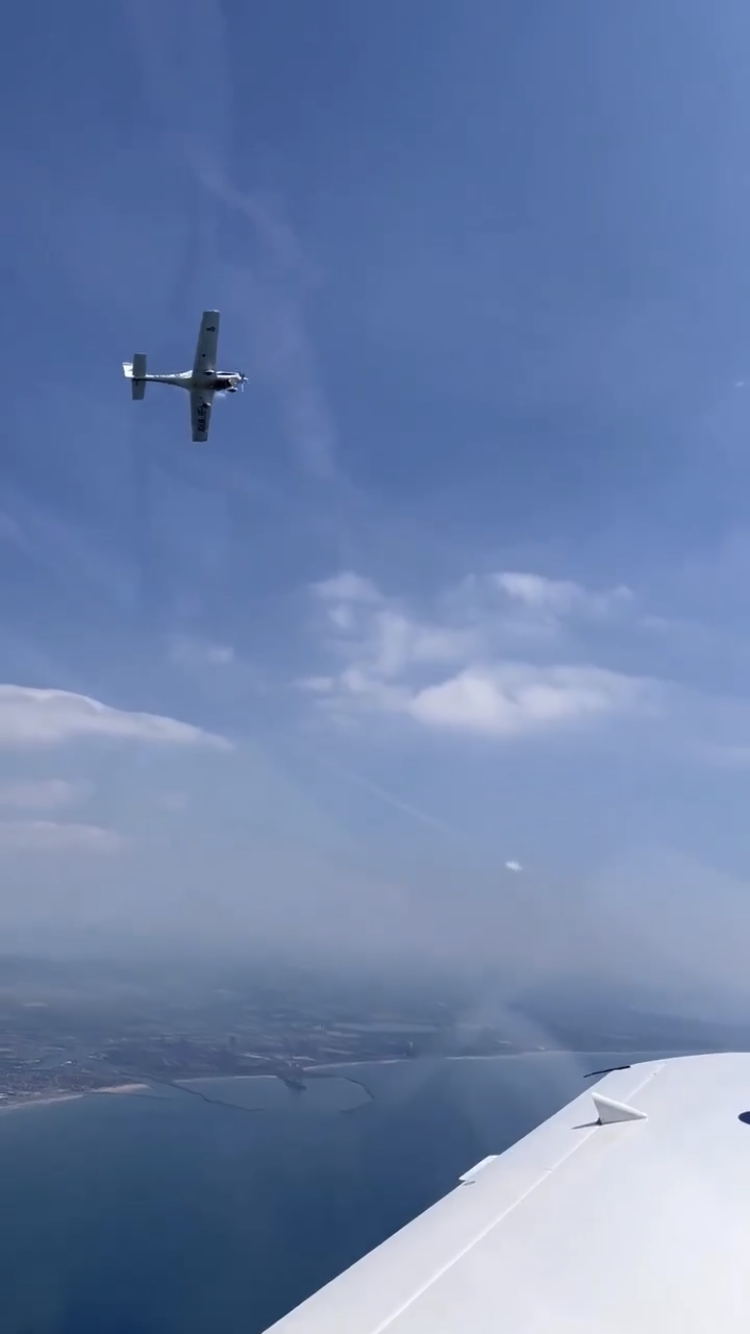
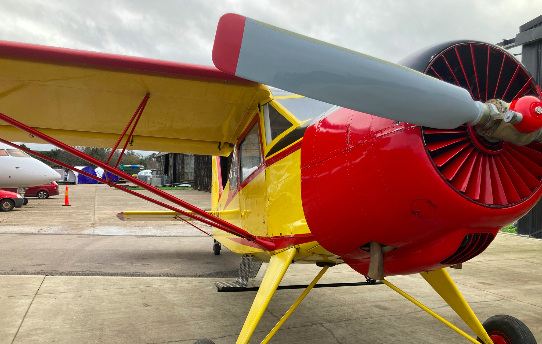
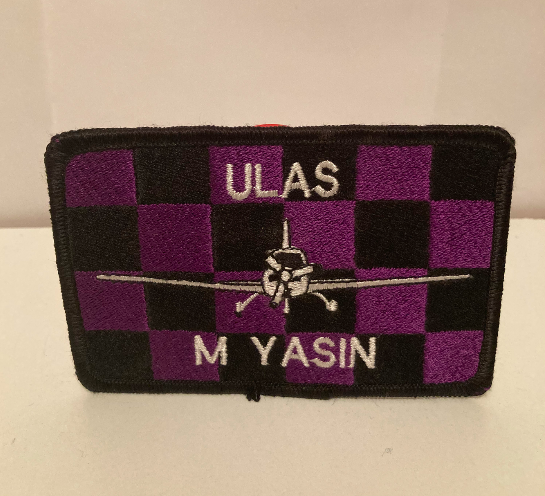
I also had the opportunity to fly. I flew on the Grob Tudor (115E) at RAF Wittering which taught me the basics of flying.
Each member is allocated ten hours of flying per year, you can do less or more depending on university commitments. You also complete a 31 hour syllabus – this includes everything from the aircraft itself to pre-check, takeoff and landings.
I undertook the Elementary Flying Training. This involved taught and practise knowledge of principles of flight, aircraft technical and meteorology. As well as basic, essential skills such as take offs, landings and some aerobatics. Prior to flying I took time out to voluntarily read up on the Pooley’s PPL books. This was a good way to experience what I had learnt in theory was indeed what was happening in reality. For example the slipstream effect, left yaw tendency and the use of rudder and ailerons when initiating turns.
The highlight of my ULAS journey aside from flying was fundraising for the Jon Egging Trust. The trust supports vulnerable young people and gives opportunities to the under-privileged to inspire and empower them to kick-start their flying career, and rightly so! This trust is close to my heart as I understand the struggles of the financial hoops to start flying. Fundraising for the Jon Egging trust was definitely amongst my proudest experiences in ULAS.
I am ever-grateful to the RAF for offering this great opportunity to me as it gifted me my first real chance of flying. I would highly recommend UAS to anyone passionate about aviation. Aside from flying the people you’ll meet and the skills you will acquire are invaluable.